Examination
Prepare for your viva like the examination it is
Examiners want to see that you own the work and can talk about it as an independent researcher. This kit turns the weeks before it into structured preparation - and keeps the corrections afterwards under control.
Candidates tend to either re-read the thesis passively or try to memorise answers. Neither prepares you for a sustained conversation with examiners who have read your work closely.
What you work through
- Decode your examinationFormat, panel, length and your institution's outcome categories, in its own words.
- Profile your examinersA dossier for each, and where each is likely to probe.
- Know the thesis coldA one-page chapter map, the numbers you must know instantly and a page locator.
- State your contributionYour original contribution rehearsed as a single sentence, a short paragraph and a longer spoken version.
- Defend your decisionsDesign, sampling, instruments, analysis and scope: what you did, why, and what you rejected.
- Name the weaknesses firstTurning a limitation into evidence of judgement.
- Work the question bankFifteen types of viva question with the opener for each.
- Answer like a researcherThe shape of a good answer, and phrasing for disagreement and for not knowing.
- Prepare the presentationA slide framework built to your time limit, with online-viva checks.
- Read the roomSix examiner styles and how to handle the hard moments.
- Run mock vivasSet one up properly, score it on seven dimensions and debrief into fixes.
- The day and the correctionsWhat to bring, what to note in the room, and a tracker that gets corrections signed off first time.
The Preparation Tracker
The workbook that goes with the worksheets, for Excel or Google Sheets:
- Specifications — how your examination runs and the results it can end in
- Examiners — a dossier per examiner and their likely lines of questioning
- Question Bank — fifteen question types, your three points each, and what you have not yet said aloud
- Mock Scores — scores from each practice viva, so you can see what improved
- Corrections — each correction in the examiners' words, mapped to the change and page
Look inside
Low-resolution, watermarked previews of four pages.
Is it for you?
- Candidates who have submitted and are waiting for a viva or defence.
- Anyone facing an oral qualifying exam - a dedicated page explains how preparation differs.
It contains no model answers and promises no outcome - it structures preparing and rehearsing your own answers.
Free to use alongside it: Guide: thesis corrections after the viva.
The Defence & Viva Kit — $15, one-time.
Kits for your other milestones
-
 Proposal, ethics and confirmation
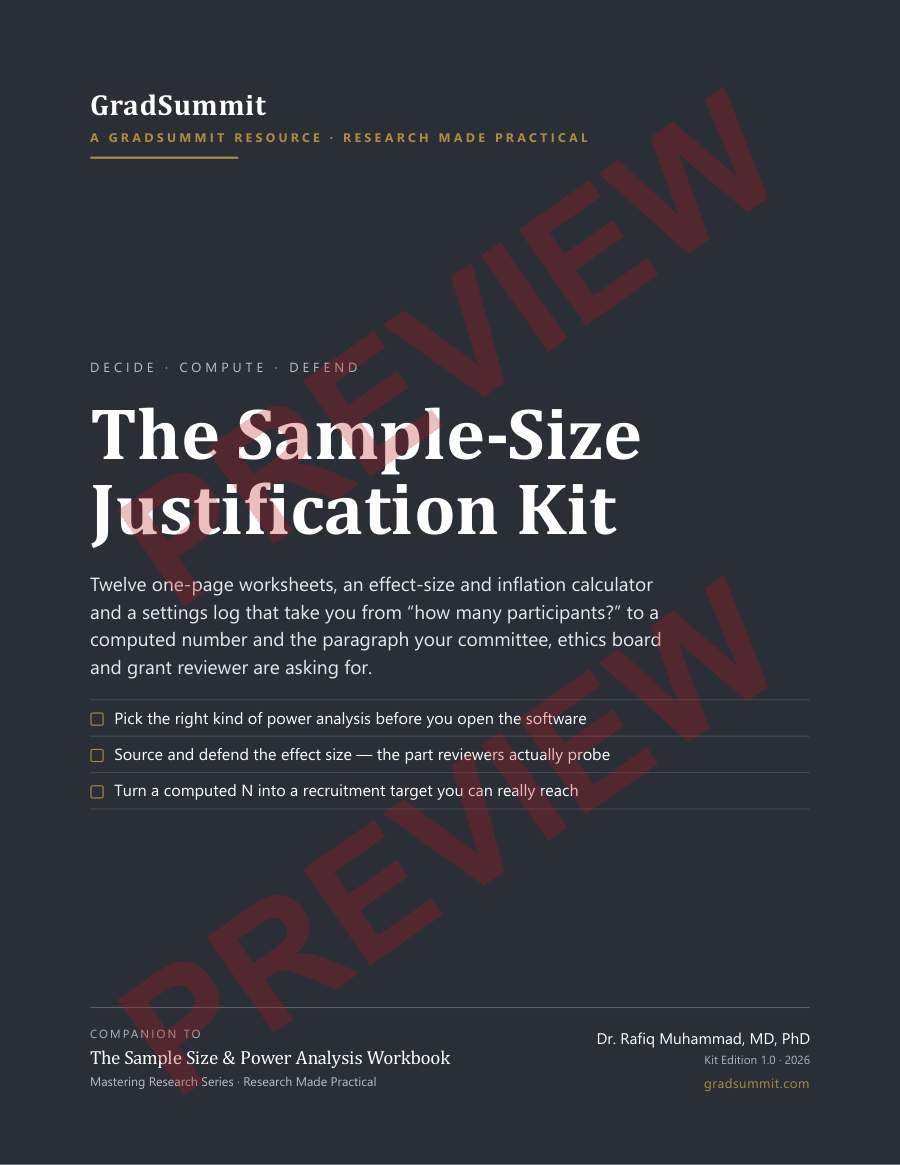
The Sample-Size Justification Kit
Worksheets and a calculator log for the sample-size section your committee and ethics board will question: a sourced effect size, a number and the paragraph.
$12 -
 Literature review chapter
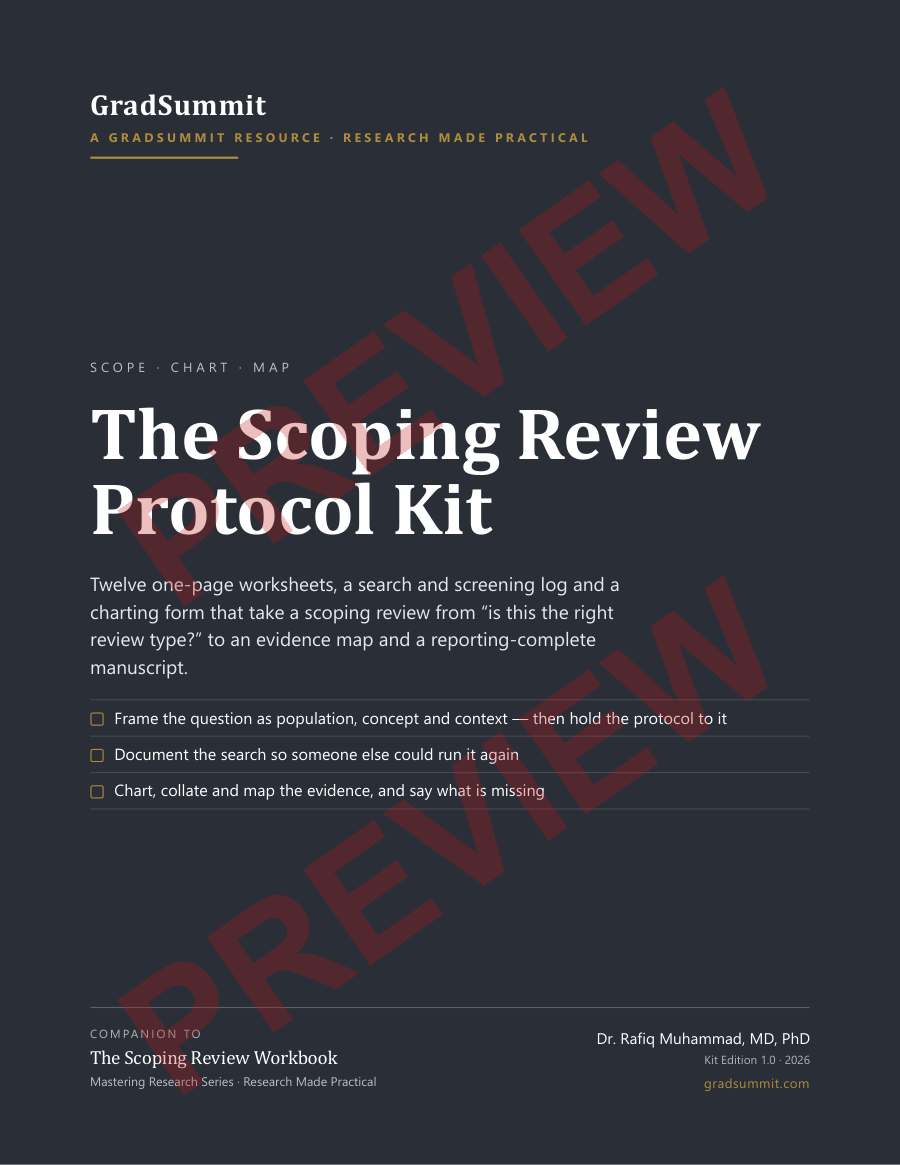
The Scoping Review Protocol Kit
A protocol, search log, screening record and charting form for a thesis scoping review - so the chapter can be examined and the review published.
$12 -
 Throughout the thesis
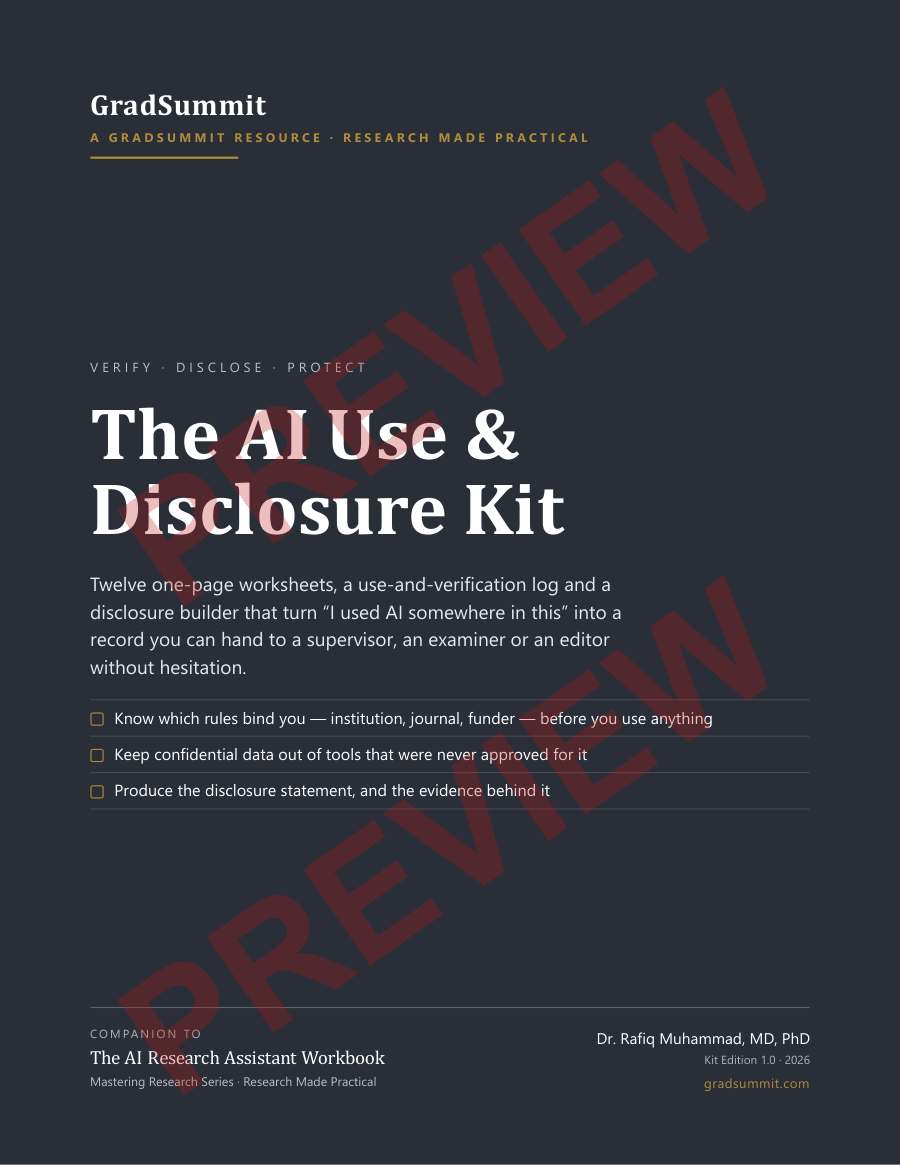
The AI Use & Disclosure Kit
Record, verify and disclose how you used AI tools in a thesis: your institution's rules, a data gate, a verification log and a disclosure statement.
$9 -
 Publishing during candidature
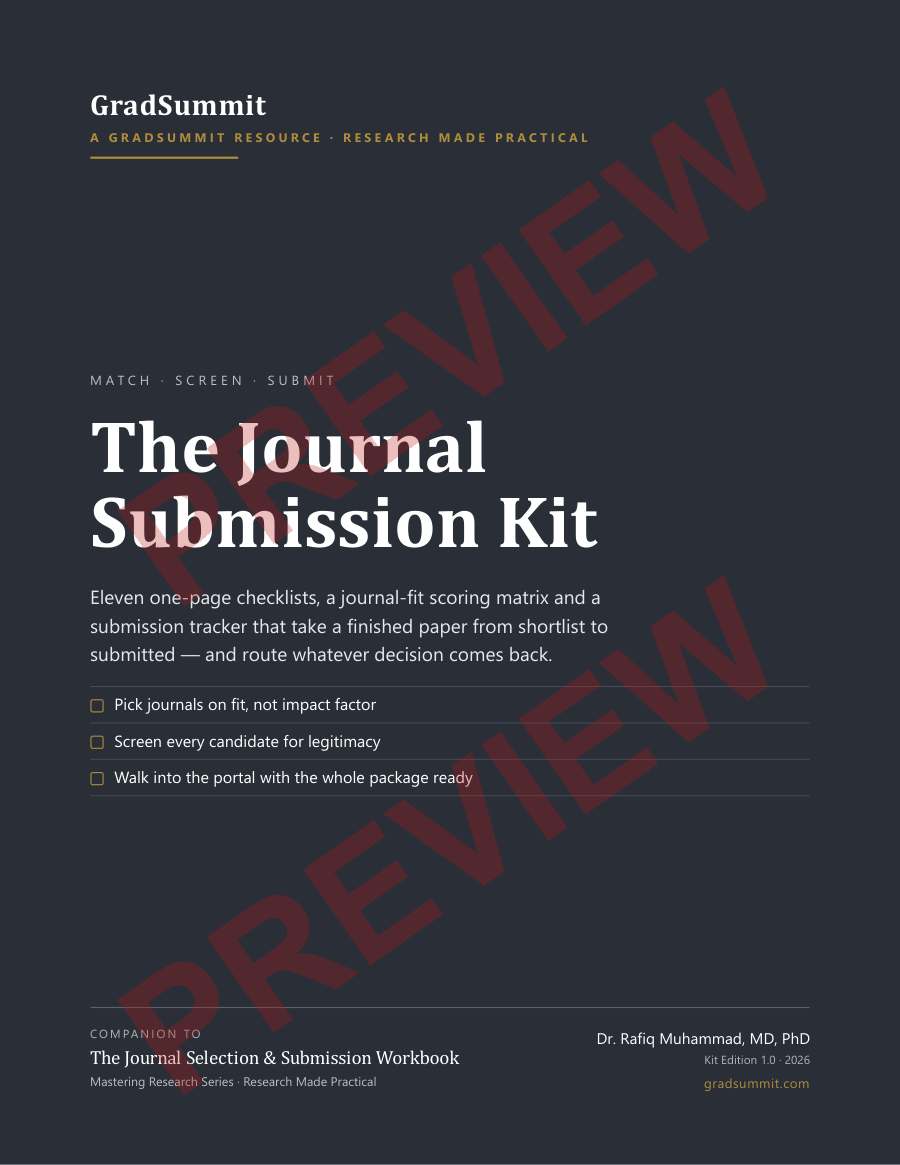
The Journal Submission Kit
Checklists and a tracker for submitting a paper during your PhD: shortlist journals, check scope and legitimacy, build the package and track decisions.
$9
Frequently asked questions
How long before the viva should I start?
Six to eight weeks is comfortable; two is workable if you focus on the contribution, your decisions and one mock. Hold the last mock at least a week before the date.
My defence is public, not a closed viva. Does it apply?
Yes. Formats differ between countries and institutions, so every worksheet that touches format asks you to record your own institution's rules rather than assuming a model.
Who should run my mock viva?
Ideally someone who has examined before and has not supervised you. The kit shows how to brief them and gives them a scoring sheet so the feedback is specific.
Does it help with corrections?
Yes. The corrections tracker records each request in the examiners' words, and maps it to what you changed and on which page - the record examiners need to sign corrections off.
What do I get, and in what format?
One ZIP download: the kit as PDF in both US Letter and A4, and a workbook that opens in Excel or Google Sheets. Fill the PDFs in on screen or print them.
How do I get the files?
The download page opens as soon as Stripe confirms payment, and a copy of the link arrives by email. A link stays valid for two weeks and ten downloads, and a replacement can be requested below whenever you need one.
Who processes the payment?
Stripe. The receipt and download email come from the author's publishing imprint, GradSummit, which delivers the kits for this site. Your card details are never seen by us.
What if the files will not open?
Email us within two weeks of buying and we will fix it or refund you in full. A refunded purchase can no longer be downloaded.
Lost your download link?
Type the address you paid with and a new link will be sent to it.